Coffee at 3 A.M. and Nobody Asked Why: The All-Night Hangouts That Held 1979 Together

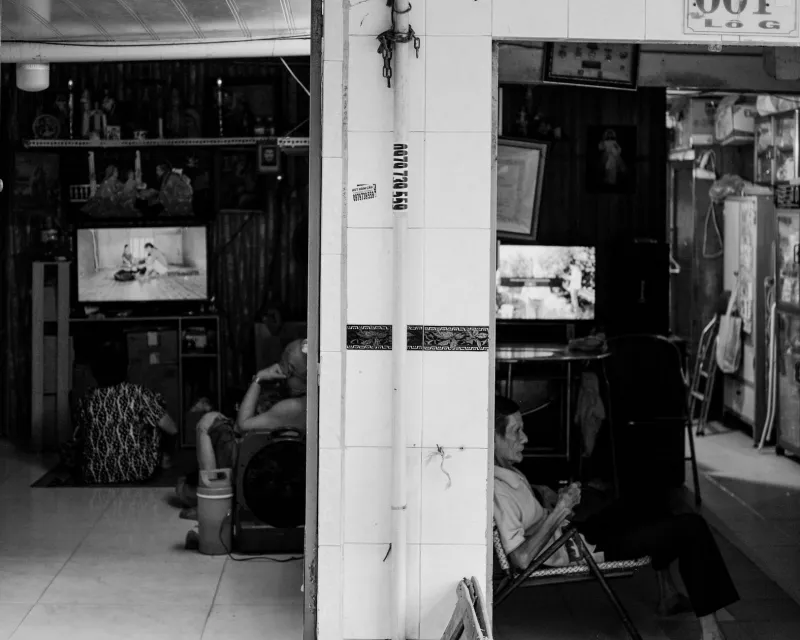
Photo by Photo by Hameen Reynolds on Unsplash on Unsplash
The booths were cracked vinyl, usually red. The menus were laminated and sticky at the corners. The coffee came in a ceramic mug that had been washed ten thousand times and still felt slightly greasy, and it was the best coffee you'd ever had because it was 2:47 in the morning and you needed it and it was there.
That was the whole deal with the all-night diner in 1979. It didn't promise you anything fancy. It just promised to be open, which in the geography of late-night American life, was the only promise that mattered.
The Third Space Nobody Named But Everybody Used
Sociologists eventually coined the term "third space" — somewhere that isn't home and isn't work, a neutral zone where community happens organically. In 1979, nobody called it that. They just called it the diner, or the bowling alley, or the arcade. But those places were doing exactly that work, night after night, for people who needed somewhere to be that wasn't the two places they were supposed to be.
The beauty of the 24-hour hangout was its radical non-exclusivity. You didn't need a reservation. You didn't need a membership card, a dress code, or a credit card with a high enough limit. You needed maybe two dollars for coffee and pie, or a handful of quarters for the bowling lane, or a pocket full of change for the Asteroids machine in the corner. That was the entire barrier to entry. Two dollars and you belonged there as much as anyone.
For teenagers especially, this was enormous. The late-1970s teen existed in a world that was constantly trying to route them somewhere supervised — school, home, organized activities. The all-night diner was the glorious exception. You could show up at midnight, order a Coke and a plate of fries, and sit there for three hours talking about nothing important, and nobody would bother you. The waitress would refill your water, maybe ask if you wanted anything else, and then leave you completely alone. That was the social contract, and both sides honored it.
What Happened in the Booth Stayed in the Booth
Here's the thing about those booths: they were confessional in a way that no designed social space has ever replicated. Something about the late hour, the low hum of the refrigerator unit behind the counter, the fact that the rest of the world was asleep — it loosened people up. Real conversations happened over bad coffee and mediocre pie in ways that never quite happened anywhere else.
Couples worked through fights in those booths. Friends talked each other off ledges. Somebody's older brother explained something true about life over a plate of scrambled eggs at 4 a.m. that you'd remember for thirty years. The diner wasn't trying to facilitate any of this. It was just open, and open was enough.
The staff at these places had a particular quality that's hard to describe but instantly recognizable if you experienced it: they were unshockable. The overnight waitress at a 24-hour diner in 1979 had seen everything. She'd seen heartbroken prom queens, rowdy bowling league guys, night-shift factory workers, insomniacs, drifters, and every variety of teenager the American suburbs could produce. She brought your food, she kept your coffee warm, and she did not judge. That non-judgment was its own kind of hospitality.
The Bowling Alley After Midnight
If the diner was the heart of 1979's nocturnal social scene, the late-night bowling alley was its loud, slightly chaotic cousin. Bowling alleys in 1979 were not the upscale, cocktail-bar-adjacent experiences they've become in some cities today. They were loud, they smelled like rental shoe spray and cigarette smoke, the carpet was an assault on the senses, and they were absolutely magnificent.
Bowling leagues dominated the earlier evening hours, but once those wrapped up — usually by ten or eleven — the alley transformed. The serious bowlers went home. The lanes opened up for open bowling, and the crowd that filtered in was a glorious mix: teenagers on loose curfews, young couples on cheap dates, groups of guys who'd just gotten off second shift at the plant, the occasional insomniac who'd discovered that rolling a ball at pins was surprisingly therapeutic at midnight.
The bowling alley had an arcade section, almost always. A row of machines along one wall — pinball, early video games, maybe a Skee-Ball lane — that drew its own crowd of quarters and concentration. These weren't the polished arcade destinations that would explode in the early '80s. They were scrappier than that. A Pong machine. A Space Invaders cabinet that someone had drawn on with a marker. A pinball machine with a slightly warped flipper that you had to account for if you wanted a decent score.
And yet those machines, in that context, at that hour, were electric. They were something to do. They were a reason to stay.
The Corner Arcade and the Economy of Quarters
Standalone arcades in 1979 existed in a particular kind of commercial purgatory — too specialized to be family restaurants, too noisy to be taken entirely seriously, but absolutely thriving on foot traffic from anyone between the ages of twelve and twenty-five who had a few quarters and nowhere else to be.
The quarter was the currency of the 1979 night. You accumulated them. You traded them. You borrowed them and paid them back with a seriousness that would embarrass the people we've become. A pocket of quarters on a Friday night was a budget and a social plan and a ticket to belonging all at once.
Arcade culture in 1979 was pre-competitive in the formal sense — there were no tournaments, no streaming, no sponsorships. There was just the high score board, written in marker or displayed on the machine's screen, and the very specific pride of having your initials up there. That was the whole reward. Your three letters, in the top five, on a machine in a corner arcade in your town. It was enough. It was more than enough.
What Replaced It and What Didn't
The places that filled the role of the 1979 all-night hangout in subsequent decades have been, almost without exception, worse at the actual job. The chain restaurant closes at eleven. The coffee shop shuts at nine. The bar requires you to be twenty-one and spend real money and tolerate noise levels that make conversation impossible.
The 24-hour diner still exists in some cities, and where it does, it still works exactly the same way it worked in 1979. That's not a coincidence. The format was essentially perfect for its purpose. No improvements were needed or possible.
What made these spaces irreplaceable wasn't their aesthetics or their menus or their amenities. It was their availability and their neutrality. They were there when you needed somewhere to be. They didn't make you justify your presence. They kept the lights on and the coffee hot and let you work out whatever you needed to work out in the company of strangers who were, in the most important way, exactly like you.
They were open. In 1979, that was a radical act of community.