Shake It and See: How the Polaroid Camera Made Imperfection the Most Beautiful Thing in the Room
There's a photo somewhere — maybe in a shoebox in your parents' attic, maybe tucked inside a paperback nobody's opened since Reagan was president — of a birthday party, a backyard barbecue, a prom night. The colors are slightly off. The edges are a little soft. Someone's face is half-washed out by the flash, and there's a greenish tint to the whole thing that no color correction tool would ever deliberately choose. And yet, somehow, it looks exactly right.
That's the Polaroid effect. And in 1979, it was everywhere.
The Camera That Printed the Party
By the late 1970s, Polaroid had been around for decades — Edwin Land introduced the original instant camera back in 1948 — but 1979 was the year it really hit its cultural stride. The OneStep, released in 1977, had made the technology genuinely accessible, and by '79 it was showing up at kitchen tables, high school dances, and holiday gatherings across America. You didn't need a darkroom. You didn't need to wait a week for the drugstore to develop your roll. You just pointed, clicked, and pulled out a glossy little rectangle that slowly revealed itself like a magic trick.
That reveal was everything. Shaking the photo — which, for the record, Polaroid always said you shouldn't do, but everyone did anyway — was its own kind of ceremony. You'd huddle around it, watching the image bloom out of the chemical fog, arguing about whether the colors were coming in right, laughing at whoever blinked. It was communal in a way that uploading to a shared album just isn't. The photo existed in your hands, in real time, in the room where the moment happened.
Status Symbol With a Shutter
Owning a Polaroid in 1979 also carried a certain social weight. Film packs weren't cheap — you got maybe eight or ten shots per pack, and each one cost real money. That scarcity made every frame deliberate. You didn't spray-and-pray the way you do with a smartphone. You chose your moment. You thought about it, even briefly, before you pressed the button. And because the image was immediately physical — something you could hold, hand to someone, stick on a refrigerator with a magnet — it had gravity that digital files still struggle to replicate.
At parties, pulling out a Polaroid camera was a statement. It said you were the person making memories, the one who'd be handing out little paper souvenirs at the end of the night. It was the 1979 equivalent of being the person with the best camera phone at a concert, except the output was tactile and irreplaceable rather than infinitely duplicable.
The Aesthetic Nobody Tried to Create
Here's the thing about Polaroid photos from that era: every single "flaw" that photo editors now spend hours replicating in Lightroom presets or VSCO filters was simply what happened when the chemistry did its thing. The warm color shift toward yellow and orange. The vignetting around the edges. The slight blur in the corners. The way highlights blew out into soft white halos. None of it was intentional. All of it was gorgeous.
Digital photography, for all its extraordinary capability, optimizes toward a kind of neutral perfection — accurate color, sharp edges, noise-free shadows. It's technically superior in almost every measurable way. But "technically superior" and "emotionally resonant" aren't the same category. The Polaroid's imperfections told you something about the light in that room, the temperature, the specific chemistry of that particular pack of film. Every photo was a record of conditions, not just subjects. It felt situated in a moment rather than extracted from one.
Why Gen Z Is Hunting Vintage Cameras Right Now
Walk through any flea market in Brooklyn, Austin, or Portland on a Saturday morning and you'll spot them — people in their early twenties carefully examining old Polaroid OneSteps and SX-70s, asking vendors if the cameras still work, negotiating prices on film packs that may or may not still be viable. This isn't nostalgia for a time they lived through. It's nostalgia for an experience they've never had but can sense is missing.
Instagram, TikTok, and every other platform have created an environment where images are so heavily curated, filtered, and optimized that authenticity has become the rarest aesthetic of all. Gen Z grew up in that environment. They know what a "natural" photo looks like after forty-five minutes of editing. They can spot a fake candid from three scrolls away. And some of them are exhausted by it in a way that's driving them straight toward the most lo-fi, uncontrollable, genuinely unpredictable image-making technology available.
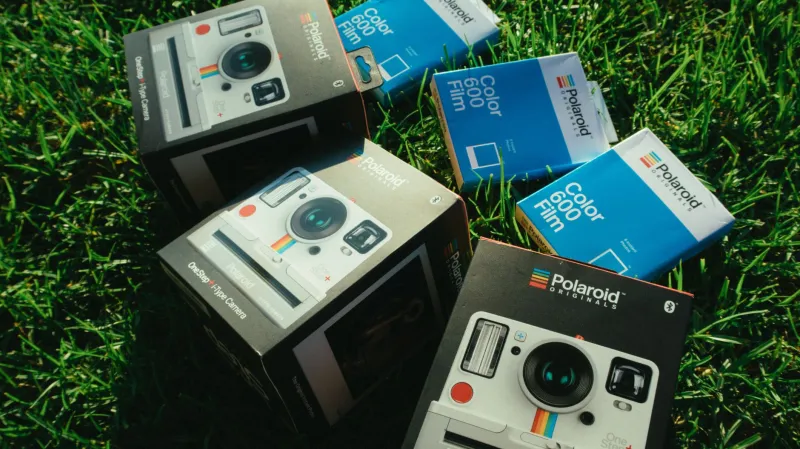
Polaroid itself noticed. The company — reborn after bankruptcy under the Impossible Project, now trading as Polaroid Originals — has been selling new instant cameras and film for years, and business has been strong enough that they've expanded their product line repeatedly. The Instax line from Fujifilm tells the same story. Instant photography is not a niche hobby. It's a genuine cultural response to digital overload.
The Photo You Couldn't Delete
Maybe the most radical thing about a 1979 Polaroid photo is that you couldn't take it back. Once that image developed, it existed. You couldn't review it on a screen before anyone else saw it. You couldn't run it through a filter before handing it over. You couldn't decide after the fact that you looked bad and quietly delete it. The person you handed it to had it, and that was that.
There's something almost confrontational about that now. We've built an entire relationship with our own images around the concept of editorial control — the ability to approve ourselves before anyone else sees us. The Polaroid didn't offer that deal. It just showed you exactly what was there, weird colors and soft focus and all, and dared you to love it anyway.
And people did. They stuck those photos on mirrors and bulletin boards and inside lockers. They wrote names and dates on the white border at the bottom with a Sharpie. They kept them for decades in shoeboxes that survived moves and marriages and everything else life threw at them.
That's the thing about a photo that nobody tried to make perfect. It didn't need to be. It was already real.
The Frame That Time Couldn't Touch
In 1979, when you shook that little white square and watched a moment materialize out of nothing, you weren't thinking about legacy or aesthetic theory or the cultural implications of analog versus digital. You were just watching a picture of your friend appear in your hands, and laughing, and maybe writing their name on the border before you gave it to them to keep.
That's it. That was the whole thing. And somehow, forty-five years later, it still sounds like exactly enough.