Stranger on the Line: How a Ringing Phone at Dinnertime Quietly Shaped American Politics in 1979
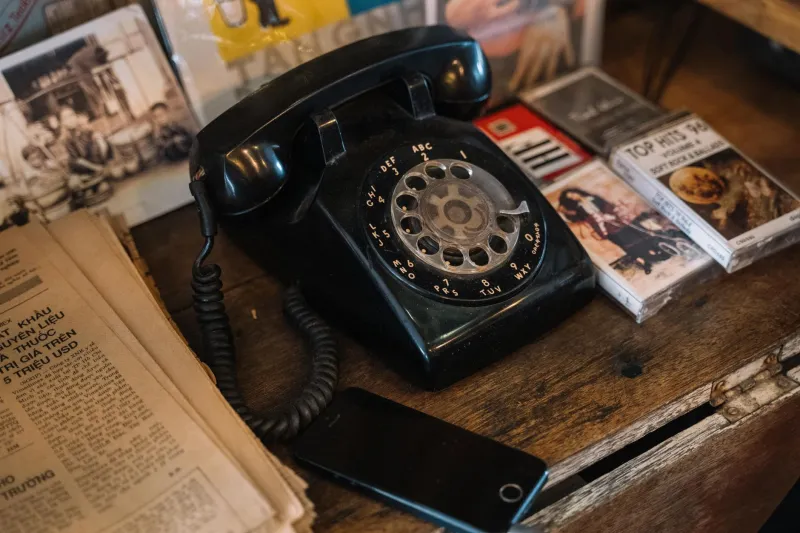
You know the scene. It's 6:47 on a Tuesday evening. Your mom has just set the casserole dish on the table. Your dad is halfway through his second glass of iced tea. The TV in the background is mid-sentence about something happening in Iran. And then — ring.
Nobody moves for a second. Then somebody gets up, because in 1979, you always got up. You didn't know who it was. It could be your aunt in Cincinnati. It could be a neighbor with news. Or it could be a guy named Gary from a research firm in Columbus, Ohio, asking whether you approved of the President's handling of the energy crisis on a scale of one to five.
That call — annoying, intrusive, weirdly intimate — was the backbone of American public opinion research. And somehow, improbably, it worked.
Before the Algorithm, There Was Gary
The polling industry didn't start in 1979, but something shifted that year. The combination of political tension (Jimmy Carter was deep in his struggles with inflation and the Iranian hostage crisis), a maturing consumer economy, and the widespread adoption of residential phone lines created the perfect conditions for telephone-based research to explode.
By the late '70s, roughly 93 percent of American households had a telephone. That number sounds obvious now, but it was genuinely revolutionary at the time. For the first time in history, you could reach a statistically meaningful cross-section of the country without mailing questionnaires or knocking on doors. All you needed was a phone book, a bank of rotary-dial phones, and a room full of people willing to work evenings.
Pollsters like Gallup and Harris had been doing telephone surveys for years, but 1979 marked the moment when the practice went fully mainstream — and fully commercial. Market research firms, political consultants, and consumer brands all realized at roughly the same moment that the dinner hour was a goldmine. People were home. They were reachable. And a surprising number of them would actually talk to you.
The Beautiful Mess of Random Sampling
Here's what made the whole system both maddening and kind of brilliant: it was genuinely random in a way that today's targeted data collection simply isn't.
When a pollster in 1979 dialed a number from a regional phone directory, they had almost no information about who was going to pick up. They didn't know your income bracket, your media consumption habits, your political affiliation, or whether you'd clicked on an ad for lawn fertilizer three weeks ago. They just knew your general geographic area and whether you answered.
That randomness was a feature, not a bug. Political scientists and statisticians of the era understood that a truly random sample — annoying as it was to execute — produced results that were surprisingly accurate. The 1979 Gallup polls tracking Carter's approval ratings, for instance, were conducted almost entirely by phone, and their methodology held up well against actual electoral outcomes in the years that followed.
The chaos of not knowing who would answer actually created a kind of accidental democracy. A factory worker in Detroit had the same statistical weight as a lawyer in Boston. A retired teacher in rural Georgia counted just as much as a young professional in San Francisco. Nobody was being micro-targeted based on their digital footprint. The sample was messy and human and, in its own weird way, fair.
What the Telemarketers Were Really Selling
Of course, not every call was a political poll. The late '70s also saw the rise of commercial telephone marketing at serious scale, and the line between market research and sales pitch was blurry from the start.
Consumer brands were obsessed with understanding what Americans wanted in 1979 — partly because the economy was unpredictable and partly because competition was intensifying across nearly every product category. Automakers wanted to know how people felt about fuel efficiency after the oil crisis. Food companies were testing new product concepts over the phone before spending a dime on packaging. Television networks were using call-in surveys to gauge audience reaction to new shows before they committed to full seasons.
In a very real sense, the telemarketer calling your house during M*A*S*H was doing the same job that a social media algorithm does today — trying to figure out what you wanted before you even knew you wanted it. The difference is that the telemarketer had to actually talk to you. They had to navigate your irritation, your distraction, your half-eaten dinner. The interaction was human, imperfect, and resistant to easy manipulation.
You couldn't game a phone survey the way you can game an online poll. There was no share button, no way to flood the lines with bots, no organized campaign to skew the results. If you wanted to lie to the pollster, you had to do it out loud, in real time, to another human being. Most people didn't bother.
The Political Machine Picks Up the Receiver
By 1979, political operatives had fully woken up to what telephone polling could do for a campaign. The 1980 presidential race was already casting its shadow, and both parties were investing heavily in phone-based research to understand voter sentiment.
Ronald Reagan's eventual campaign team used telephone polling extensively in the run-up to the 1980 primaries, tracking shifts in opinion about inflation, foreign policy, and Carter's leadership with a granularity that hadn't been possible a decade earlier. The data coming back over those phone lines helped shape messaging, refine talking points, and identify which issues were genuinely moving voters in swing states.
What's striking, looking back, is how much of that intelligence came from conversations that started with a stranger interrupting someone's evening meal. The pollster had maybe ninety seconds to establish rapport, ask their questions, and get honest answers before the person on the other end lost patience. It forced a kind of efficiency and directness that modern digital surveys — with their endless dropdown menus and skip logic — often lack.
What We Lost When We Stopped Answering
The golden age of telephone polling didn't last forever. Caller ID arrived in the late '80s. Cell phones complicated sampling in the '90s. By the 2000s, response rates had collapsed, and the industry was scrambling to adapt.
What replaced the dinner-hour call was a fragmented ecosystem of online panels, push notifications, and algorithmically curated surveys that reach people who've already opted in to being reached. The randomness is gone. The accidental democracy of Gary from Columbus interrupting your Tuesday casserole is gone.
And with it, arguably, went something important. Today's polling struggles with selection bias in ways that 1979's random-digit dialing simply didn't. The people who answer online surveys are different from the people who don't. The algorithm knows too much about you before it even asks the question.
Back in 1979, Gary didn't know anything about you. He just knew your number. And somehow, in that beautiful, annoying ignorance, he was getting closer to the truth than most of what passes for public opinion research today.
Next time your phone buzzes with a survey notification, think about that. Then think about whether you'd have picked up for Gary.