White Suits and Wild Nights: How Saturday Night Fever Turned America Into a Dance Floor
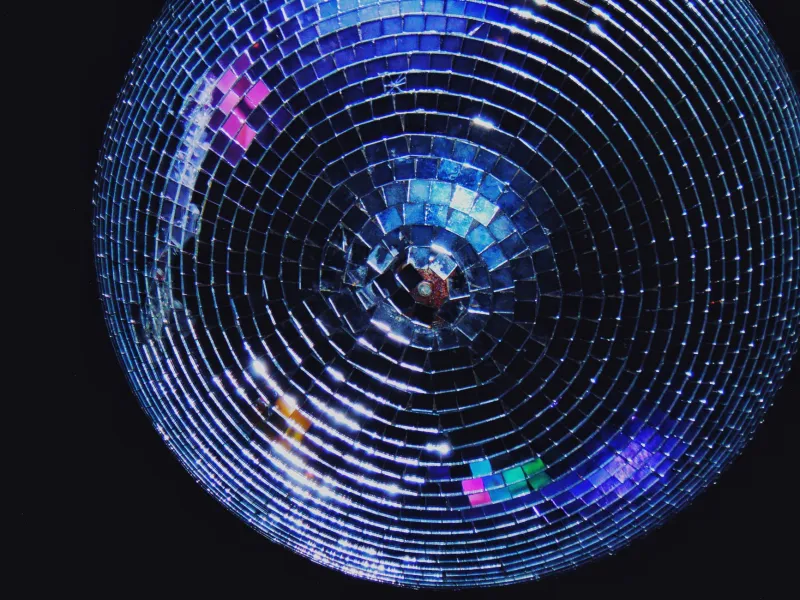
There's a moment — you probably know it even if you weren't alive to see it — where John Travolta steps onto that lit-up dance floor, points a finger at the ceiling, and the Bee Gees start to wail. That single image didn't just define a movie. It defined a decade. And by the time 1979 rolled around, Saturday Night Fever had stopped being a film and become something closer to a religion.
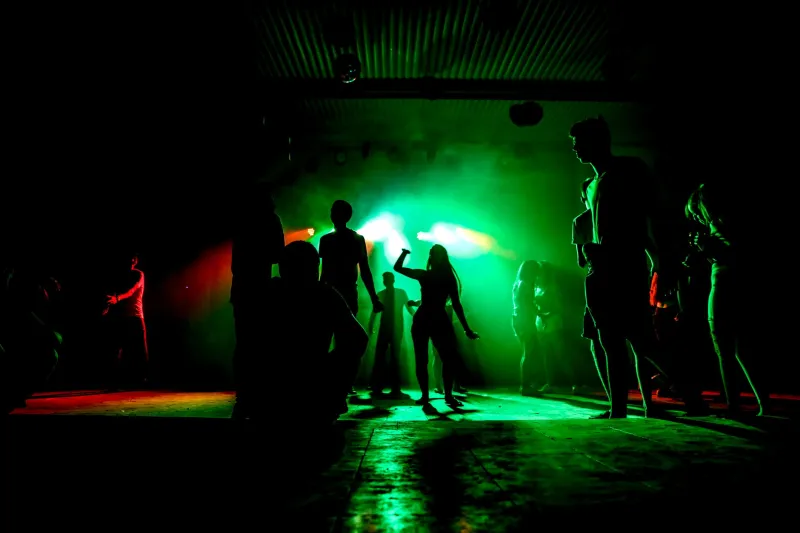
Released in December 1977, the movie took a little while to find its full gravitational pull. But 1979? That was the year the shockwave hit hardest. Record stores couldn't keep the soundtrack in stock. Dance studios were turning away students. And across every city in America — from Manhattan to Milwaukee — nightclubs were redesigning their floors to install that iconic checkerboard lighting.
From Brooklyn to the Entire Country
What made Saturday Night Fever so explosively relatable wasn't just the dancing — it was the hunger underneath it. Tony Manero, Travolta's character, was a paint store clerk from Bay Ridge, Brooklyn, who had exactly one place where he felt like somebody: the dance floor. That tension between ordinary daytime life and the electric possibility of the night spoke directly to working-class Americans who were living through economic uncertainty, post-Vietnam malaise, and a general cultural hangover.
Discotheques had existed since the late 1960s, and by the mid-70s, places like Studio 54 were already legendary. But those venues felt exclusive, almost mythological. Saturday Night Fever democratized disco. It told audiences in suburban Ohio and rural Texas that the dance floor was for them, too — that you didn't need a velvet rope or a celebrity connection to claim your own spotlight.
Dance studios across the country reported enrollment spikes of 30 to 40 percent through 1978 and into 1979. Arthur Murray locations — the kind of place your aunt went for the foxtrot — suddenly found themselves teaching the hustle to twenty-somethings in satin shirts. It was a genuine grassroots movement, powered by a two-hour movie and a soundtrack that wouldn't quit.
The Soundtrack That Ate the Charts
You can't talk about the film's cultural legacy without spending serious time on the music. The Saturday Night Fever double album, featuring the Bee Gees at the absolute peak of their creative powers, became the best-selling soundtrack album in history at the time of its release. Songs like "Stayin' Alive," "Night Fever," and "How Deep Is Your Love" weren't just background noise — they were the emotional architecture of an entire era.
By 1979, these tracks had moved well beyond the film. They were the soundtrack to first dates, to heartbreaks, to late-night drives home from the club. Radio stations built entire programming blocks around the disco format, and the Billboard charts looked like a Bee Gees fan convention for most of the year. Even artists who had nothing to do with disco started incorporating four-on-the-floor rhythms and string arrangements into their records because that's what the market demanded.
The ripple effects extended into R&B, funk, and even early electronic music. Producers like Giorgio Moroder were pushing synthesizers into territory that would eventually birth the entire dance music landscape of the 1980s and 1990s. You can draw a pretty direct line from Tony Manero's white suit to the DJ booths of Chicago house music — and from there, straight into every club night happening right now.
Fashion That Refused to Apologize
Let's be honest: the fashion was a lot. Wide lapels. Polyester everything. Platform shoes that could double as step stools. And yet — here's the wild thing — it all looked intentional. Saturday Night Fever gave permission to dress with theatrical boldness, to treat your going-out clothes as a costume for the best version of yourself.
By 1979, menswear had undergone a genuine revolution. Department stores were stocking open-collar shirts and flared trousers as mainstream staples, not novelties. Women's disco fashion — wrap dresses, halter tops, high-waisted trousers with dramatic flare — filtered into everyday wardrobes with surprising staying power. Designers like Halston and Diane von Furstenberg found their moment partly because the cultural appetite for glamorous, body-conscious clothing was at an all-time high.
Fast-forward to today, and the nostalgia cycle has brought a lot of this back. Vintage polyester shirts fetch real money on eBay. Thrift stores in Brooklyn and Los Angeles get picked clean of anything that looks vaguely 1970s. High fashion houses regularly raid the disco era for runway inspiration. The aesthetic proved far more durable than the critics who called it tacky ever imagined.
The Backlash and What It Really Meant
Of course, no cultural phenomenon this massive escapes without a backlash. "Disco Sucks" became a genuine movement, culminating in that infamous July 1979 Disco Demolition Night at Comiskey Park in Chicago, where a crate of disco records was literally blown up between games of a White Sox doubleheader. The event turned into a riot. It was ugly, and in retrospect, a lot of the anti-disco sentiment carried uncomfortable undercurrents of homophobia and racism, given that disco had deep roots in Black and LGBTQ+ communities.
But here's what the backlash couldn't undo: the cultural DNA had already been transplanted. The dance floor as a space of freedom and self-expression, the idea that music was something you moved to rather than just listened to, the understanding that nightlife could be a legitimate art form — all of that survived disco's commercial peak and became foundational to everything that followed.
The Legacy Lives on the Dance Floor
Walk into almost any nightclub in America today and you're standing in a room that Saturday Night Fever helped build. The DJ as a cultural figure, the importance of the dancefloor layout, the way lighting and sound design work together to create an experience — these are all ideas that got turbocharged by the film's popularity and the disco era it amplified.
Travolta's Tony Manero remains one of cinema's most enduring characters precisely because he understood something essential: that how you move through the world says everything about who you are. In 1979, millions of Americans decided to move with a little more swagger, a little more intention, and a whole lot more rhythm.
And honestly? We could all use a little more of that.