Smoke Screen: How 1979 Made Cigarettes the Last Great Symbol of Cool — and Started Killing the Myth
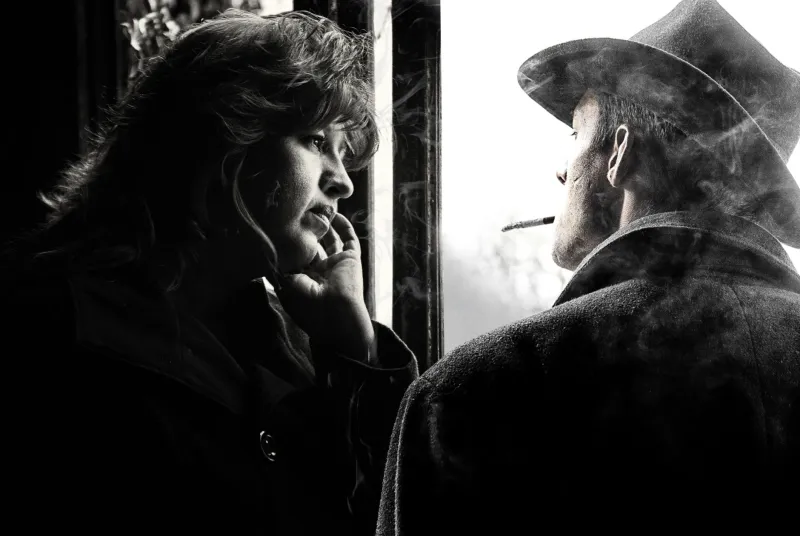
There's a particular kind of scene that defined 1979 cinema. A character leans against a doorframe, lights up without breaking eye contact, exhales slowly, and suddenly the whole room belongs to them. No dialogue needed. The cigarette did all the talking.
It sounds almost absurd now. But in 1979, that image wasn't just common — it was currency. Smoking on screen meant something. It telegraphed danger, depth, independence, and a certain brand of effortless cool that no amount of clever scriptwriting could manufacture on its own. And yet, even as Hollywood and network television were burning through cartons like they were going out of style, a quieter story was unfolding in the background. Because they kind of were.
Everybody Was Doing It — Especially on Screen
Let's set the scene. By 1979, the average American adult had been surrounded by cigarette advertising for decades. The Marlboro Man was practically a national monument. Tobacco companies had only recently been booted from television commercials — a ban that took effect in 1971 — but that didn't stop cigarettes from dominating the small screen in a different way entirely: through the characters people actually cared about.
Detective shows were basically nicotine delivery systems wrapped in plot. Columbo had his cigars, perpetually half-lit and weaponized as a disarming prop. Charlie's Angels — still going strong in '79 — had characters who smoked with the casual elegance of women who simply did not have time for your judgment. Daytime soaps treated the cigarette as emotional shorthand: light one up and audiences immediately understood the character was stressed, scheming, or about to deliver news nobody wanted to hear.
On the film side, the late seventies were practically a golden age for the cinematic cigarette. The antihero era that had exploded earlier in the decade was still very much alive, and the cigarette remained its most reliable accessory. Tough guys smoked. Complicated women smoked. Even the romantic leads smoked — usually right before or after something emotionally significant, because nothing punctuated a dramatic moment like a slow exhale into the middle distance.
The Character Shortcut That Actually Worked
What made 1979 particularly interesting is how deliberately cigarettes were used as character-building tools — not just atmospheric filler. Writers and directors understood that a cigarette could communicate entire backstories in seconds.
A character who chain-smoked was anxious, world-weary, or hiding something. A character who smoked exactly one cigarette per scene was controlled, calculating, dangerous in a quiet way. A character who quit smoking mid-story? That was a redemption arc signaled without a single line of exposition. And a character who bummed cigarettes off everyone else? Comic relief, probably, or someone you definitely shouldn't trust with your car.
This kind of visual shorthand was enormously efficient for an era that didn't have the luxury of ten-episode streaming arcs to develop nuance. You got ninety minutes or a forty-four-minute episode. The cigarette pulled its weight.
Celebrities reinforced all of it off-screen. Photos of musicians, actors, and cultural figures with a cigarette in hand filled magazine spreads throughout the year. It wasn't even really about smoking — it was about the image smoking created. Rebellious. Uncompromising. Slightly self-destructive in a way that read as romantic rather than reckless.
But the Cracks Were Already There
Here's the thing about 1979 that gets overlooked when we romanticize the era: it wasn't actually as uniformly permissive about tobacco as the on-screen imagery suggests. The seeds of the cultural shift had already been planted, and they were starting to sprout in uncomfortable places.
The Surgeon General's report linking smoking to cancer wasn't new — that had dropped back in 1964. But by the late seventies, public health messaging had become louder and harder to ignore. Anti-smoking advocacy groups were gaining real traction. The idea that secondhand smoke might harm non-smokers was moving from fringe concern to legitimate public health conversation. And critically, the generation that had grown up watching their parents smoke was starting to ask questions.
You could actually see this tension playing out on screen if you knew where to look. Villain characters were increasingly likely to be heavy smokers — not in the brooding antihero way, but in the shorthand-for-moral-decay way. The corporate bad guy always had a cigarette. The corrupt cop. The manipulative socialite. The cigarette was still cool, but it was also quietly being recruited as a marker of corruption.
This wasn't an accident. It was culture processing a contradiction in real time. Smoking was cool AND smoking was starting to feel like something the bad guys did. Both things were true simultaneously, and 1979 sat right at that uncomfortable intersection.
The Tobacco Industry Knew the Party Was Winding Down
Big Tobacco wasn't oblivious to any of this. Internal documents that would later become public through litigation revealed that by the late seventies, the industry was deeply aware that its cultural moment was shifting. The response was to double down on lifestyle marketing — connecting cigarettes not to the act of smoking but to the feeling of freedom, adventure, and individuality that American consumers were hungry for in a post-Vietnam, post-Watergate moment of national uncertainty.
It worked, for a while. The imagery was compelling enough that even people who were skeptical about smoking could appreciate the aesthetic. But the gap between the fantasy being sold and the reality being documented by medical researchers was widening every year. 1979 was one of the last years that gap was small enough to mostly ignore.
What the Screen Was Really Telling Us
Looking back at 1979 through a modern lens, the smoking saturation in film and television reads almost like a farewell tour. The medium was celebrating something it could feel slipping away — not dramatically, not with any conscious acknowledgment, but in the way that cultures tend to mythologize things right before they lose them.
The cigarette in 1979 pop culture was doing double duty: it was still the ultimate cool prop AND it was quietly being repositioned as a signifier of moral ambiguity. Both roles made for compelling television and cinema. Neither role was going to survive the decade that followed.
By the mid-eighties, the calculus had shifted enough that Hollywood's relationship with tobacco would never quite be the same. The villains kept smoking. The heroes started putting them out.
But in 1979, for one last unfiltered year, the cigarette still had the floor. And honestly? It knew how to work a room.
Catch more deep dives into the year that shaped everything at 79winn.com.