Stoop Kids, Corner Stores, and the Block Party That Replaced Every App We've Ever Built
Somewhere right now, a product manager at a tech company is in a meeting pitching a new feature designed to help you feel more connected to the people who live within a quarter mile of you. There's a slide deck. There's a user journey map. There's probably a name that sounds like a neighborhood but isn't one — something like "Hearth" or "Block" or "Grove." And it will almost certainly fail to do what a single summer afternoon in 1979 accomplished without a single line of code.
That's the thing about 1979 neighborhood life. It didn't try. It just worked.
The Corner Store Was Doing What Yelp Only Dreams About
Let's start with the corner store, because it was doing heavy lifting that nobody ever fully credited. In 1979, nearly every urban and suburban neighborhood had one — a small grocery, a bodega, a five-and-dime, a pharmacy with a soda counter. Whatever it was called, it functioned as something far more important than a retail outlet. It was the neighborhood's central nervous system.
You didn't just go there to grab a bottle of Pepsi or a pack of baseball cards. You went there to find out what was happening. Who was having a cookout Saturday. Whose kid just made the Little League team. Whether the Hendersons' dog had gotten loose again. The guy behind the counter — and it was usually a guy, often the owner — knew your name, knew your parents' names, and had probably been running a tab for your family since before you were born.
That's not nostalgia talking. That's a genuinely functional information network operating at the hyper-local level. Nextdoor.com has 77 million users and still can't replicate the efficiency of two people talking over a candy display.
The Street Was the Social Network
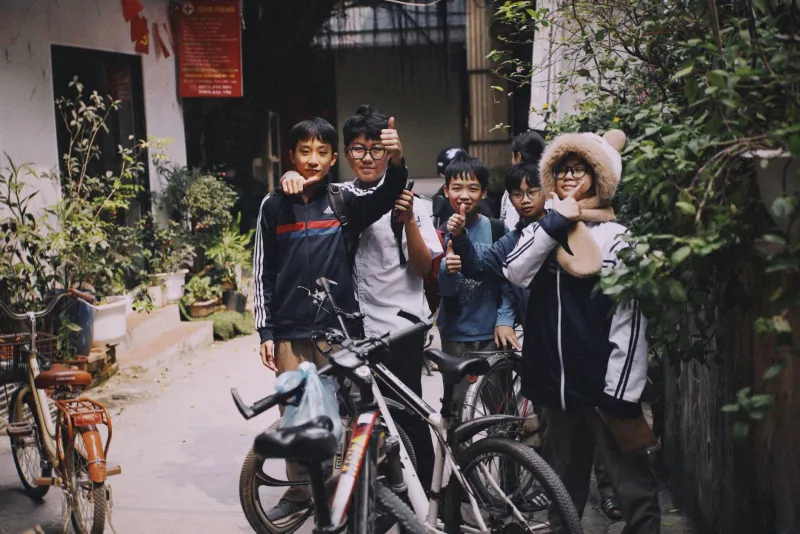
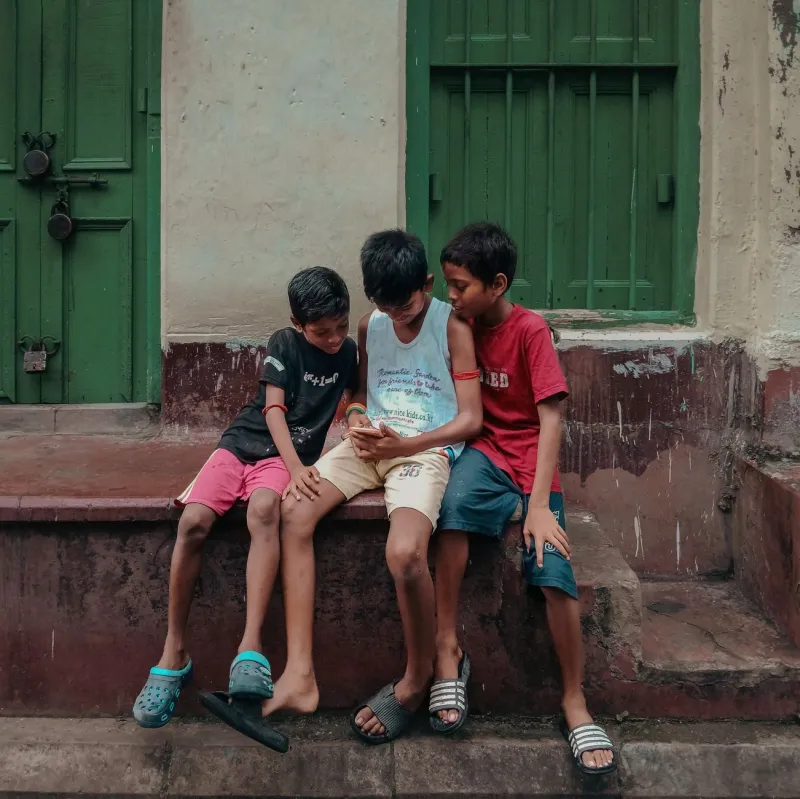
In 1979, the street itself was infrastructure. Kids played stickball and kickball and elaborate games with rules that varied block by block. Adults sat on stoops and front porches in the long summer evenings, and those stoops were not just places to sit — they were stages, confessionals, community boards, and debate clubs all at once.
The physical design of the neighborhood enforced community in ways that nobody consciously planned. Sidewalks meant you passed your neighbors walking to and from places. Driveways were short or nonexistent, so you parked on the street and walked past four houses to get to your front door. Every errand was a social encounter. You couldn't really opt out.
Modern suburban development, by contrast, has been almost perfectly engineered for isolation. Wide streets discourage walking. Attached garages mean you can drive straight into your home without ever setting foot on a sidewalk. Backyards replaced front yards. The whole architecture quietly said: you don't have to interact with anyone if you don't want to. And so, mostly, we stopped.
Block Parties and the Art of Showing Up
If the corner store was the nervous system and the stoop was the living room, the block party was the neighborhood's annual heartbeat. In 1979, these things were serious productions. Somebody got the permit from the city to close off the street. Somebody else borrowed the long folding tables from the church or the VFW hall. Somebody's dad had a grill the size of a small aircraft carrier, and he was going to use it.
The block party didn't require you to share interests or politics or aesthetics with your neighbors. It required you to share a street. That was enough. You showed up because you lived there, and showing up was the whole point. The retired couple from the end of the block ate potato salad next to the young family that had just moved in. The teenagers ran the three-legged race with kids half their age. Nobody was algorithmically matched. Nobody had curated their guest list.
The social friction that modern platforms work so hard to eliminate — the awkward conversation, the neighbor you don't particularly like but have to be civil to anyway — was actually the thing that made community real. Frictionless connection isn't connection. It's content consumption with a profile picture attached.
The Community Pool Was Doing Something Profound
Don't sleep on the community pool as a piece of social infrastructure. In 1979, public and neighborhood association pools were genuinely communal spaces in a way that's hard to fully appreciate now. You went there all summer, every summer, and so did everyone else. You watched kids you'd known since kindergarten learn to swim. You gossiped on the pool deck. You played Marco Polo with people you'd never have chosen as friends but ended up loving anyway because you spent every July afternoon together.
The pool had a snack bar that charged a quarter for a Creamsicle, and the lifeguard who worked the afternoon shift was a junior from the high school whose name everybody knew. It was a contained world with its own social hierarchy, its own dramas, its own recurring characters. It was, in other words, exactly what every social media platform promises and almost never delivers: a place where you genuinely belonged.
What We've Been Trying to Build Back Ever Since
Here's the uncomfortable truth at the center of all this: we've spent the last twenty years and hundreds of billions of dollars building digital tools to recreate something that 1979 had by accident. Facebook started as a way to connect with people you already knew. Twitter was supposed to be the digital town square. Nextdoor literally named itself after the concept. None of them quite got there.
Because what made 1979 neighborhood life work wasn't technology or even intention — it was proximity and repetition. You saw the same people over and over again, in the same physical spaces, without choosing to. That repetition built familiarity, and familiarity built trust, and trust built something that actually deserved the word community.
The algorithm can show you someone who shares your interests. It cannot make you the kind of person who waves to a stranger every morning until the stranger becomes a neighbor and the neighbor becomes a friend. That only happens in real space, over real time.
The Grooviest Lesson 1979 Left Behind
1979 didn't have a strategy for community. It had sidewalks, corner stores, community pools, and people who didn't have anywhere else to be on a Saturday afternoon. It had a physical world that made isolation slightly inconvenient and connection slightly inevitable.
We keep building apps to solve the loneliness epidemic, and maybe some of them help at the margins. But the real answer has been sitting there in the architectural and social DNA of a 1979 block all along: show up, stay put, and let the neighborhood do the rest.
Somebody's stoop is still out there. The block party permit probably costs about forty bucks. And the Creamsicles, adjusted for inflation, are still worth it.