One Year, Six Genres, Zero Rules: How 1979 Built the Soundtrack to Everything That Came After
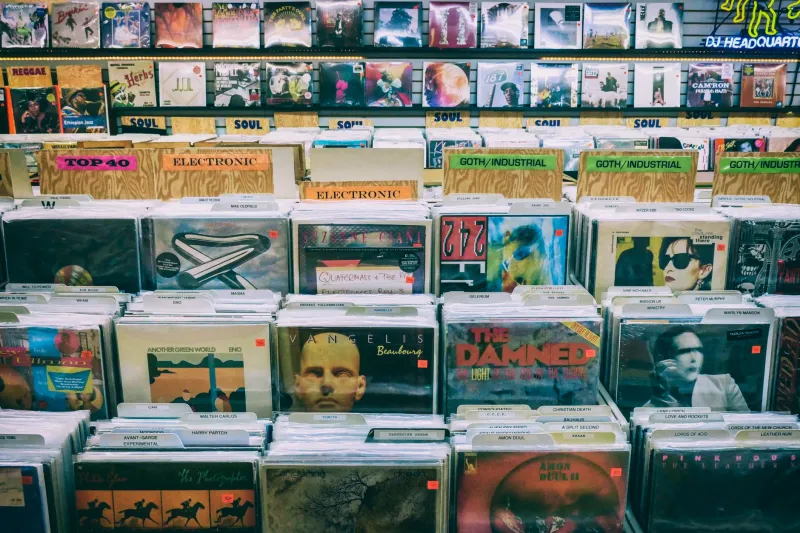
Pull up any major music streaming platform right now and search for '1979.' You'll find playlists with millions of followers, algorithm-generated mixes that keep coming back to the same handful of records, and comment sections full of people in their twenties insisting this was the greatest year in music history — a year they weren't alive for. They're not wrong. Nineteen seventy-nine was something genuinely unusual: a twelve-month window where rock, disco, punk, new wave, and progressive rock didn't just coexist on the charts. They collided, cross-pollinated, and came out the other side as something that the music industry is still processing.
This wasn't an accident. It was a perfect storm of technology, cultural tension, and a handful of artists who simply refused to stay in their assigned lanes.
The New Wave Takeover Nobody Saw Coming
If you had to pick two records that define the sound of 1979's genre-blurring moment, Parallel Lines by Blondie and Candy-O by The Cars make an almost unfair pairing. Both arrived as new wave was still being defined — a genre that was less a coherent style than a collective refusal to sound like what came before.
Blondie's Heart of Glass is the track that crystallized everything. Here was a band that came out of CBGB's punk scene, fronted by one of the most magnetic performers in pop history, making a song that was unambiguously, unapologetically disco. The production — all pulsing synthesizer bass and four-on-the-floor kick drum — was borrowed directly from the genre that punk was supposed to despise. And it worked so completely, so effortlessly, that it essentially gave an entire generation of musicians permission to stop caring about genre loyalty.
The Cars were doing something adjacent but distinct. Ric Ocasek's songwriting took the angular energy of new wave and married it to AM radio hooks so clean they almost felt like a provocation. Candy-O is an album that sounds simultaneously like the future and like something you've always known. That combination — forward-looking production with deeply familiar melodic instincts — became a template that power pop and alternative rock would spend the next twenty years trying to replicate.
Pink Floyd and the Art of Going Bigger
While new wave was stripping rock down to its bones, Pink Floyd was doing the opposite. The Wall, released in November 1979, arrived like a weather event — a double album of such cinematic scope and emotional ambition that it essentially created its own category. The record wasn't just a commercial juggernaut (it would go on to spend fifteen weeks at number one on the US charts); it was a demonstration that rock music could carry the weight of a full psychological narrative without collapsing under it.
Producer Bob Ezrin and the band built sonic landscapes that felt genuinely unprecedented at the time — layered orchestration, tape effects, and Roger Waters' voice used as both instrument and confession. The production techniques pioneered on The Wall showed up almost immediately in the work of artists as varied as U2, Nine Inch Nails, and Radiohead. The album's influence isn't really debatable at this point. It's more like gravity — just something that's always there, shaping everything around it.
Donna Summer and the Sound of Crossover
Disco gets a bad reputation in certain rock-centric corners of music history, and that reputation is mostly unearned. The genre's peak commercial moment arrived in 1979 with Donna Summer's Bad Girls, a record that did something remarkable: it made disco sound dangerous.
Produced by Giorgio Moroder and Pete Bellotte, Bad Girls combined the genre's signature four-on-the-floor pulse with rock guitar licks, funk bass lines, and Summer's extraordinary vocal range pushed into territory that had no real precedent in dance music. The title track in particular — with its honking horns and that unmistakable guitar riff — sounded like Times Square at midnight, which was exactly the point.
What Moroder was developing in the studio during this period was essentially the blueprint for electronic dance music as we'd come to understand it decades later. The synthesizer sequencing, the meticulous layering of rhythmic elements, the use of the studio itself as a compositional tool — all of it points directly forward to house, techno, and the entire landscape of contemporary electronic production.
The Punk Hangover That Produced Something Better
By 1979, pure punk's initial explosion had already peaked and was beginning to fragment. What came out of that fragmentation was, in many ways, more interesting than what preceded it. The Clash's London Calling — recorded in 1979 and released in the UK that December — is the definitive document of what happened when punk musicians started listening to everything they'd previously claimed to reject.
Reggae, rockabilly, jazz, R&B, straight-ahead rock and roll — London Calling pulled from all of it without apology or irony. Joe Strummer and Mick Jones weren't abandoning punk's confrontational spirit; they were expanding its vocabulary. The album's American release in January 1980 meant it straddled the cultural moment perfectly, arriving just as US audiences were primed for something that had punk's urgency but rock's accessibility.
The record's influence on American alternative music specifically is almost impossible to overstate. Every college rock band of the '80s, every indie act of the '90s that wanted to sound politically engaged without sounding preachy, owes a significant debt to what The Clash figured out in those 1979 sessions.
Why the Production Techniques Matter as Much as the Songs
One thing that gets lost in purely cultural discussions of 1979's music is how much the sound of these records — the actual technical decisions made in the studio — shaped what followed. Multi-track recording had been around for years, but producers in 1979 were using it with a new kind of intentionality. Synthesizers were becoming more accessible and more sophisticated simultaneously. Recording budgets at major labels were large enough to allow genuine experimentation.
The result was a year of records that sounded different from everything that came before — not just in terms of style, but in terms of sonic texture. The way The Wall uses space and silence. The way Moroder's productions for Donna Summer treat rhythm as architecture. The way The Cars' records have a almost hyper-real clarity that still sounds contemporary today. These weren't accidents. They were the result of artists and producers pushing the available technology to its absolute limit.
The Year That Made Everything Else Possible
Here's the argument, plainly stated: 1979 was the last year that genre boundaries in popular music were genuinely enforced — and the first year they were genuinely broken. What happened in that twelve-month stretch created the conditions for everything that followed. Alternative rock needed new wave's template. Electronic music needed Moroder's production innovations. Indie rock needed The Clash's proof that political content and musical ambition could coexist.
The records that came out of 1979 aren't just historically significant in a museum-piece way. They're alive. Pull up Heart of Glass or The Wall or Bad Girls right now and they don't sound like artifacts. They sound like somebody figured something out early and the rest of us are still catching up. At 79 Winn, we'd call that the definition of a great year. And we'd be right.