Bell-Bottoms, Platforms, and Polyester: The 1979 Looks That Gen Z Just Can't Quit
Somewhere between a vintage Goodwill rack and a Gucci runway in Milan, 1979 is having the last laugh. The year that fashion critics once dismissed as a gaudy fever dream — all shiny lapels, platform heels, and enough polyester to carpet a stadium — has quietly become the most raided decade in contemporary style. Gen Z didn't just stumble onto these looks. They hunted them down like treasure, and honestly? They were right to.
Let's rewind to what was actually happening in America's closets circa 1979. The country was straddling two worlds. Disco still had a grip on nightlife, which meant wide-lapel blazers, silky shirts unbuttoned to dangerous territory, and trousers that flared dramatically from the knee down. Meanwhile, punk was crawling out of New York's Lower East Side and London's council estates, dragging leather jackets, ripped denim, and safety pins into mainstream consciousness. And somewhere in the suburban middle, the average American was still buying earth-toned corduroy and peasant blouses from the Sears catalog without a single regret.
It was gloriously chaotic. And it turns out chaos ages really, really well.
The Platform Problem (That Wasn't Really a Problem)
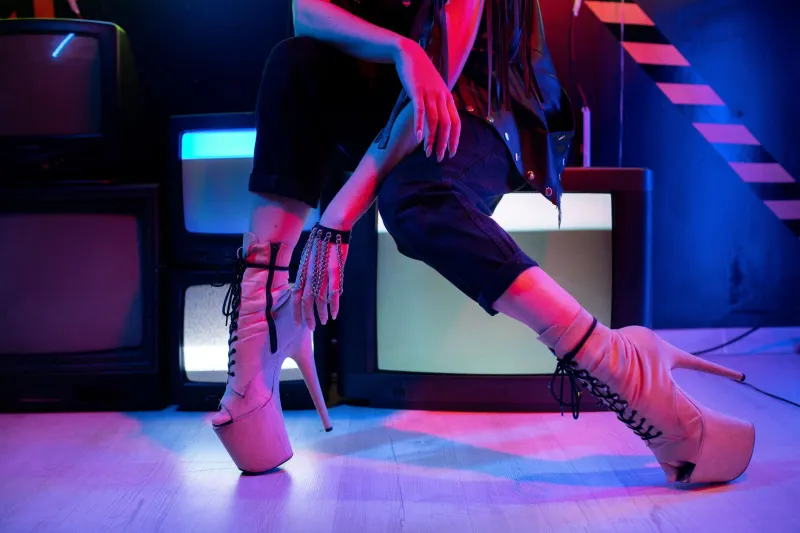
If you've walked through any major US city lately, you've noticed the shoes. Chunky-soled sneakers. Platform sandals. Boots with heels that add three inches and zero apologies. This is not a coincidence — it's a direct bloodline running straight back to 1979.
Platform shoes hit their cultural peak in the late '70s, worn by everyone from Saturday Night Fever devotees to rock stars who needed the extra height for stadium credibility. They weren't subtle. They weren't supposed to be. The whole point was elevation — literal and metaphorical. You wore platforms because you wanted to be seen.
Fast forward to today, and brands like Steve Madden, Dr. Martens, and even high-fashion houses like Versace have reintroduced chunky platform silhouettes that would look right at home on a 1979 disco floor. The proportions are almost identical. The attitude is completely unchanged. What's different is that today's wearers are doing it with full historical awareness — they know exactly where this came from, and that knowledge makes the whole thing feel cooler rather than dated.
Leather Jackets: The One Trend That Never Actually Left
Here's a dirty little secret about fashion cycles: some things never really go away. They just go underground for a while. The leather jacket is the perfect example.
In 1979, the leather jacket meant something specific. It was the visual shorthand for rebellion — worn by punk kids in CBGB, by Fonzie reruns still dominating TV, by anyone who wanted to signal that they were not, under any circumstances, playing by the rules. The Ramones made it a uniform. Debbie Harry made it glamorous. Bruce Springsteen made it American.
Today, the leather jacket (and its more sustainable cousin, the faux-leather moto jacket) is one of the most universally worn pieces in American wardrobes across every age group. It's gone from counterculture signifier to total wardrobe staple, and its 1979 DNA is still completely visible in every asymmetrical zipper and snap-button collar.
The Polyester Paradox
Okay, let's talk about the fabric that defined an era and got absolutely roasted for it. Polyester in 1979 was everywhere — in shirts, in suits, in those wide-collared leisure looks that made grown men look like they were permanently on their way to a yacht party they hadn't been invited to. It was cheap, it was shiny, it didn't breathe, and America loved it.
For decades, polyester was the punchline. Then something shifted. Sustainability conversations started changing how people thought about synthetic fabrics. Vintage shopping exploded. And suddenly, the specific texture and drape of '70s-era polyester became something designers were actively trying to recreate. That liquid, slightly-too-shiny quality that used to read as tacky now reads as intentional. Runway collections from brands like Reformation and even fast-fashion giants like Zara have leaned into silky, flowing, disco-adjacent fabrics that would make a 1979 wardrobe feel completely at home.
Why Gen Z Is Raiding Grandma's Closet
There's a sociological angle here that's worth sitting with for a second. Gen Z's obsession with '70s aesthetics isn't purely about style — it's about authenticity in an era of mass production. When everything at the mall looks identical and algorithm-driven, there's something genuinely radical about a hand-stitched peasant blouse or a pair of original Levi's cords from 1979 that have more character in one pocket than an entire fast-fashion haul.
Thrift stores across the US have reported dramatic upticks in younger shoppers specifically seeking out '70s pieces. Depop and eBay listings for vintage '79-era clothing routinely sell for multiples of their original retail price. What was once grandma's donation pile is now somebody's carefully curated vintage wardrobe content.
Stylists working with younger clients note that the appeal goes beyond aesthetics. There's a tactile quality to older clothing — the weight of real denim, the specific fade of a well-worn corduroy jacket — that simply can't be replicated by contemporary manufacturing at scale.
What the Runways Are Actually Saying
High fashion has been sending the same memo for several seasons running: 1979 was right all along. The Spring 2024 collections from houses including Bottega Veneta, Prada, and Saint Laurent featured silhouettes that would have looked completely at home on a Studio 54 guest list. Wide-leg trousers. Bold, saturated colors. Structured shoulders with a slightly exaggerated proportion. Footwear that prioritized drama over practicality.
This isn't nostalgia for nostalgia's sake. Designers are responding to a genuine cultural hunger for maximalism after years of minimalist, neutral-toned aesthetics dominated the conversation. When everything gets very quiet and beige, eventually the sequins come back. And in 1979, there were a lot of sequins.
The Takeaway From the Grooviest Year in Fashion
Here's what 1979 understood that we're only now catching up to: clothes are supposed to be fun. They're supposed to make a statement, take up space, and maybe start a conversation. The era wasn't timid about color, proportion, or personal expression. It threw everything at the wall and let the culture sort it out.
Decades later, the sorting is done — and it turns out most of it stuck. The platforms, the leather, the wide legs, the bold prints, the unapologetic shimmer. All of it is back, and all of it makes perfect sense. Fashion didn't forget 1979. It just needed a minute to realize it had been carrying those looks with it all along.