Nobody Warned You the Movies Were Lying: How 1979's Most Romantic Films Broke Real-World Dating Forever
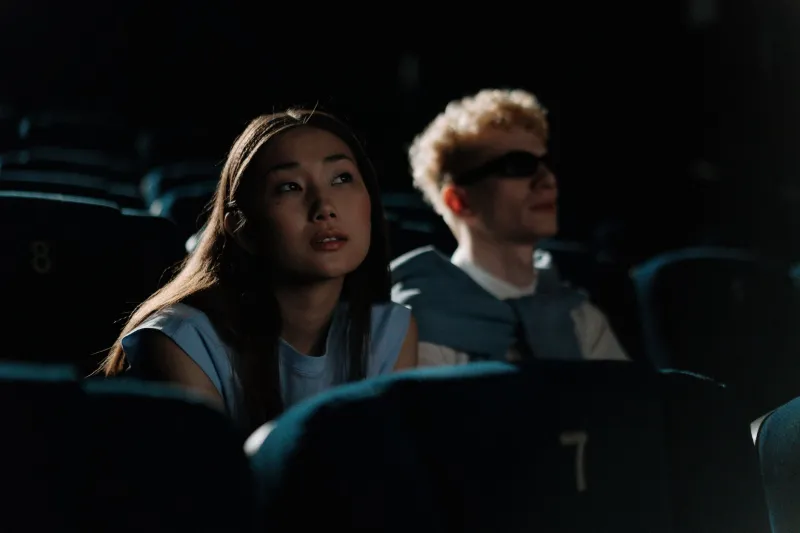
There's a moment in nearly every great 1979 romance where the music swells, the lighting goes impossibly warm, and two people look at each other like the rest of the world dissolved. It lasts maybe thirty seconds on screen. In real life, it's the thirty seconds you've been chasing your entire adult life without ever quite catching it.
That's not an accident. That's 1979 doing what it did better than almost any other year in Hollywood history: manufacturing desire so convincing that it rewired what we thought love was supposed to feel like.
The Year Hollywood Got Dangerously Good at Romance
Let's set the scene. By 1979, American cinema had fully recovered from the awkward, transitional early seventies and was operating at a kind of emotional peak. Directors had figured out how to use music, slow motion, and close-up cinematography in ways that hit audiences somewhere deep and irrational. Studios were still making big, glossy, unapologetically sentimental films — the kind that didn't need to be ironic or self-aware because nobody had told them they should be yet.
The result was a string of films that didn't just tell love stories. They performed love in a way that felt almost instructional. Audiences watched and quietly took notes, even when they didn't realize they were doing it.
10, with Bo Derek and Dudley Moore, told men that the perfect woman existed somewhere just out of reach, beautiful and free and completely indifferent to their anxiety. The Main Event put Barbra Streisand in the ring with Ryan O'Neal and made sparring look like foreplay. Starting Over with Burt Reynolds made emotional unavailability seem charming rather than exhausting. Even films that weren't strictly romantic — Kramer vs. Kramer, Manhattan — were deeply, almost obsessively preoccupied with what men and women wanted from each other and how badly they kept getting it wrong.
Collectively, they built a mythology. And mythologies, once they're in you, are very hard to unlearn.
The Swayze Problem (Yes, Even in '79)
Here's where it gets interesting: Dirty Dancing came out in 1987, but its spiritual DNA is pure 1979. The story is set in 1963, but the emotional register — that particular cocktail of class tension, physical chemistry, and the idea that one perfect summer can change who you are — that's a late-seventies invention. Patrick Swayze's Johnny Castle is the culmination of a romantic archetype that 1979 spent the whole year building.
The brooding, physically confident man who teaches you something about yourself. The woman who discovers her own desire through someone unexpected. The moment where everything clicks and suddenly the world makes sense in a way it never did before.
Gen Z daters know this archetype intimately, even if they've never seen a single film from 1979. It's been passed down through every rom-com, every prestige drama, every slow-burn Netflix series that promises the big moment is coming if you just keep watching. The origin point is largely invisible to them — but the inheritance is everywhere.
"I think I've been waiting for a 'nobody puts Baby in a corner' moment my whole dating life," says one 24-year-old from Chicago who asked to remain anonymous, laughing a little too hard at herself when she said it. "Like, I know it's not real. But also I kind of need it to be real?"
That tension — I know it's not real but I need it to be real — is maybe the most honest thing anyone has ever said about how movies mess with romance.
What a Dating App Profile Owes to 1979
Scroll through enough Hinge or Bumble profiles and you start to notice the same emotional vocabulary repeating itself. People describe themselves as looking for "someone who makes ordinary moments feel like something." They want "that feeling." They're after connection that's "effortless" and "real" and "like the movies, but actually."
That last phrase is doing a lot of work. Like the movies, but actually. People want the emotional intensity of cinema with the inconvenient realness of an actual human being attached to it. They want the lighting and the music without acknowledging that the lighting and the music were invented to make you feel something that the situation itself couldn't generate on its own.
1979 is significantly responsible for establishing what "like the movies" even means in a romantic context. The films of that year — their pacing, their visual language, their emotional beats — became the template that every subsequent romantic film either followed or reacted against. Which means they became the template for what audiences expected love to look like. Which means they became the template for what people expected their own lives to deliver.
First dates in 2024 are quietly haunted by this. The pressure to be interesting and spontaneous and magnetic. The anxiety that the chemistry isn't landing the way it should. The creeping suspicion that the other person is measuring the evening against some internal highlight reel assembled from forty-five years of romantic cinema.
They probably are. So are you.
The Gap Nobody Talks About
Here's the thing that 1979 movies never really addressed, and that dating culture still struggles to name: the gap between cinematic passion and sustained human love is enormous, and it's supposed to be.
Movies compress. They cut. They remove the boring Tuesday afternoons and the bad moods and the conversations where nobody says anything particularly interesting. What remains is pure signal — all the moments that mean something, strung together without the filler that makes up most of actual life.
Real relationships live in the filler. They're built in the ordinary moments that films edit out. The connection that matters most isn't the one that happens when the music swells. It's the one that happens when nothing is happening and you still want to be in the room with that person.
1979 didn't teach us that. It couldn't — it wasn't in the business of teaching us that. It was in the business of making us feel something huge and immediate and unforgettable for ninety minutes and then sending us back out into the world slightly dissatisfied with reality.
Which, honestly? Respect. That's a genuinely impressive trick.
Chasing the Feeling Anyway
The strange thing about knowing all of this — knowing that the romantic expectations baked into our culture were largely manufactured by a handful of very good filmmakers working in a very specific moment in Hollywood history — is that it doesn't actually make the expectations go away.
You can understand intellectually that 10 invented a particular male fantasy of perfect, unattainable beauty and that it filtered down through decades of pop culture into the way men evaluate the women they meet on apps. And then you can still feel the pull of it anyway.
You can know that the grand gesture, the perfectly timed declaration, the moment where everything becomes clear — these things were invented for dramatic effect and almost never happen in real life in any satisfying way. And then you can still quietly hope that yours will be different.
That's the legacy of 1979's most romantic films. Not the specific scenes or the specific actors, though those matter too. It's the emotional expectation they installed in American culture so deeply that even people who've never seen the movies are living by the rules the movies wrote.
Nobody warned you the movies were lying. But honestly, even if they had — would you have listened?