No App Required: The 1979 Toys That Taught Kids to Actually Do Something
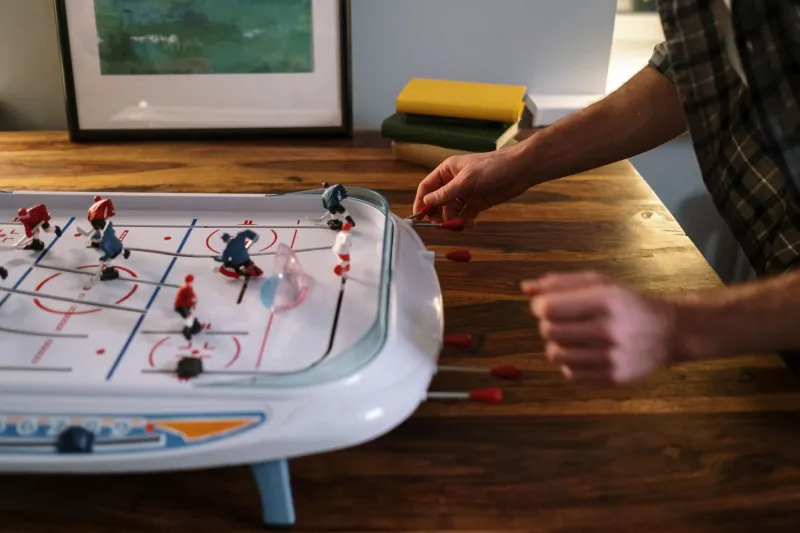
Open a toy catalog from 1979 and the first thing that hits you is how much everything looks like it requires effort. There are kits with dozens of pieces. There are models that need to be assembled with actual tools. There are chemistry sets with actual chemicals, race tracks you have to snap together yourself, and games that require you to read — and follow — a rulebook before anyone has any fun.
Nobody is doing the entertaining for you. That was entirely your job.
The Hands-On Philosophy of the '79 Toy Aisle
Walk into a Kmart or a Sears toy department in 1979 and you'd find shelves stacked with products built on a simple premise: here's a thing, now figure out what to do with it. Erector Sets. Lincoln Logs. Spirograph. Lite-Brite. The Easy-Bake Oven, which required you to actually bake something. Matchbox cars you pushed with your own hand across whatever track you'd built from cardboard and imagination.
Even the electronic toys of the era — and yes, there were electronic toys in 1979, don't let anyone tell you different — demanded active participation. Simon required you to memorize and repeat sequences. Mattel Football, that tiny red-LED masterpiece, needed genuine thumbwork and concentration. The Atari 2600 had arrived a couple of years earlier, and while it was genuinely revolutionary, you still held a joystick and made decisions. The machine didn't play for you.
This wasn't a philosophical choice by toy manufacturers. It was simply the reality of what technology could do in 1979. But the side effect was enormous: kids who grew up with these toys learned, almost by accident, how to entertain themselves.
Breaking Things Was Part of the Education
There's a particular kind of learning that only happens when something breaks and you have to figure out why. The toys of 1979 broke constantly. Plastic snapped. Batteries leaked. Model airplane wings cracked during assembly. The rubber band motor in your balsa wood glider snapped on the third wind-up.
And then you fixed it. Or you modified it. Or you figured out that the broken version actually did something more interesting than the intact one.
Toy collectors who specialize in late-'70s merchandise talk about this with genuine nostalgia — not for the toys themselves exactly, but for the problem-solving mindset they encouraged. "A kid with a broken Erector Set in 1979 didn't throw it away," says one longtime collector who runs a vintage toy restoration business out of Ohio. "They figured out what was missing, raided the hardware drawer, and built something different. That's not a small thing."
Today's connected toys — the ones with companion apps, voice activation, and automatic software updates — are engineered specifically to prevent that kind of failure. They work until they don't, and when they don't, you send them back or buy a new one. The troubleshooting loop is closed off by design.
The Safety Standards Nobody Survived
Let's be honest about something: a meaningful percentage of 1979's most beloved toys would never make it to shelves today. The chemistry sets had compounds in them that would send a modern safety regulator into a full-on spiral. Lawn Darts — Jarts, if you want to be precise — were exactly what they sound like: heavy metal darts you threw across a lawn toward a target ring. They were eventually banned in 1988 after causing several serious injuries, but in 1979 they were a standard backyard item.
Metal toy cap guns with realistic heft. Model airplane glue used in poorly ventilated bedrooms. Easy-Bake Ovens that ran on an actual incandescent bulb hot enough to genuinely burn a small hand. The bicycle that came with no helmet, because helmets weren't a thing yet.
None of this is an argument for bringing back dangerous toys. It's an observation about the cultural assumption embedded in those products: that kids were capable of navigating the world without being completely insulated from its edges. That a little risk was part of the deal.
Why Parents Are Paying Hundreds for Vintage Sets
Here's where things get genuinely interesting from a market perspective. Vintage toys from the late 1970s have become serious collector's items — not just for nostalgic adults who want to recapture something, but for parents who are deliberately choosing them for their actual children.
On eBay and Etsy, complete Erector Sets from the late '70s routinely sell for $150 to $400 depending on condition. Vintage Spirograph sets in their original boxes fetch $80 to $150. Tin toy vehicles from the era — the ones with actual moving parts you could see — have become status symbols in certain parenting communities, displayed alongside the child's other toys as a kind of intentional counterweight to the app-connected stuff.
Toy historians point to a cultural anxiety driving this market. "Parents who grew up in the '80s and '90s remember a particular quality of play that felt different from what they see their own kids doing," explains one researcher who studies American toy culture at a midwestern university. "They're trying to recreate the conditions for that kind of play, even if they can't fully articulate what made it different."
What made it different, in a word, was friction. The toys didn't work until you made them work.
The Imagination Gap
There's a concept that child development researchers have been circling for a decade now: the idea that open-ended, low-structure play builds cognitive flexibility in ways that structured, guided play doesn't. The fancy term is "self-directed play." In 1979, it was just called playing.
A cardboard box and a kid with an afternoon to fill will produce something. Maybe it's a fort. Maybe it's a spaceship. Maybe it's a store where the kid sells imaginary groceries to imaginary customers for an hour and a half. None of that requires batteries, a charging cable, or a parent to set up the app.
The toys of 1979 understood this by default. They gave you pieces and stepped back.
What We Can Actually Do With This
You don't have to hunt down a vintage Erector Set on eBay to give a kid in 2024 the experience of hands-on, low-tech play — though if you find one in good condition, it's absolutely worth the money. The principle translates to anything that requires assembly, imagination, or the possibility of failure.
Blocks. Clay. A basic model kit. A deck of cards with a book of games. A kite that you have to assemble before you can fly it.
The toys of 1979 weren't magical because they were from 1979. They were effective because they demanded something from the kid holding them. That demand — that expectation that you'd figure it out yourself — was the whole point.
And it still works. No update required.