Sealed With a Stamp: The Lost Ritual of Letter-Writing That Gen Z Is Quietly Bringing Back
There was a moment — and if you were alive and paying attention in 1979, you remember it — when the mailbox was the most exciting object in your front yard. Not because of the electric bill or the Sears catalog (though the catalog had its own magic). No, it was the possibility of a letter. A real one. Handwritten, sealed, stamped, and traveled across however many miles just to land in your hands.
That feeling had a weight to it. Literally and figuratively.
Ink Had Stakes
In 1979, writing a letter wasn't casual. You didn't just dash something off and hit send. You thought about it. You picked your paper — and yes, that choice mattered. Spiral notebook sheets torn at the edge meant something different than pale blue Crane stationery. A ballpoint pen said one thing; a felt-tip said another. Your handwriting — loopy, cramped, perfectly upright, or wildly slanted — was essentially your signature personality before anyone used that phrase.
Penmanship was still taught with genuine seriousness in American schools through the '70s. The way you formed your letters was considered a direct reflection of your character, and people in 1979 still largely believed that. A messy scrawl might be forgiven from a teenager writing to a summer camp friend, but a thank-you note to a grandmother? You rewrote that thing until it looked right.
And then there was the waiting.
The Ritual of the Wait
Here's the part that nobody under thirty fully grasps: you sent a letter, and then you waited. Days. Sometimes a week or more, depending on how far it was going. And while you waited, you thought about what you'd written. You wondered how it landed. You maybe regretted a sentence or two. You definitely checked the mailbox more than was strictly rational.
That waiting period did something to human communication that we haven't properly accounted for in the post-email world. It forced a kind of intentionality. You couldn't fire off a thoughtless message and walk it back with a quick follow-up text. What you wrote was what you meant — or at least what you were willing to stand behind for the seven to ten business days it took to get a reply.
In 1979, correspondence between friends, lovers, and family members stretched across months of back-and-forth letters that read almost like serialized novels. People kept them in shoeboxes. Some still have them.
What We Actually Lost
Email arrived gradually, then all at once. By the mid-1990s, the personal letter was already on life support. By 2000, it was largely ceremonial — reserved for wedding invitations, condolence cards, and the occasional thank-you note that someone's mother insisted upon.
What disappeared wasn't just the physical artifact, though that's real enough. What vanished was the considered voice. Email trained us to write fast and read faster. Instant messaging trained us to abbreviate. Social media trained us to perform. None of those formats reward the kind of slow, thoughtful self-expression that a handwritten letter demanded.
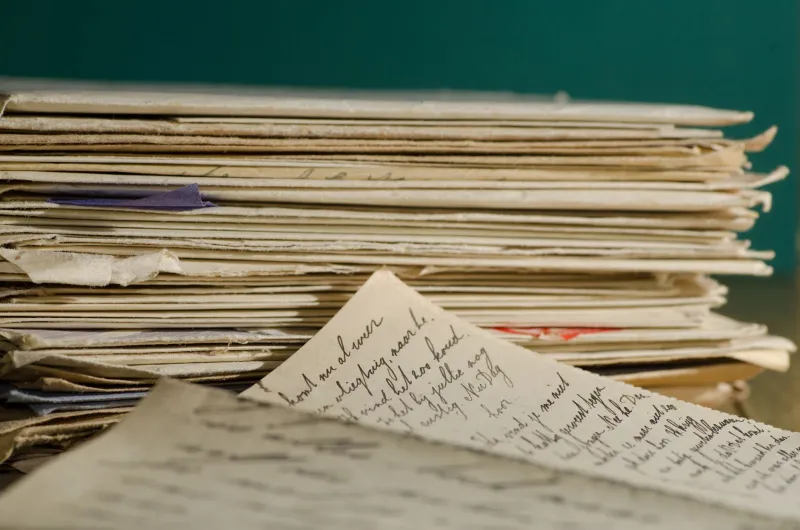
You also lost the object itself. A printed email is a sad thing. A letter from 1979, pulled from a shoebox decades later, is a time capsule. The paper has yellowed slightly. The ink has faded at the edges. You can sometimes still smell a faint trace of the perfume someone spritzed on it before sealing the envelope. No cloud storage replicates that.
The Gen Z Pen Pal Revival
Something interesting has been happening over the last few years, and it's not a marketing campaign or a brand activation. Younger Americans — particularly those in their late teens and early twenties — have been quietly rediscovering the handwritten letter. Pen pal communities have exploded on Reddit and TikTok. Stationery shops that seemed destined for extinction are reporting record sales among customers under twenty-five.
The reasons aren't complicated if you think about them for a second. Gen Z grew up entirely inside digital communication. They've never known a world without texts and DMs. Which means they've also never experienced the alternative — and when they stumble onto it, it hits like something genuinely new.
There's also a rebellion element that would feel very familiar to anyone who watched disco get torched at Comiskey Park in the summer of '79. When every form of communication is instant, frictionless, and optimized for engagement, choosing to slow down and write something by hand is a countercultural act. It's opting out of the speed economy. It's saying your words are worth the time it takes to write them properly.
What 1979 Knew That We Forgot
The letter-writers of 1979 understood something intuitively that we're only now articulating in think-pieces and wellness podcasts: the medium shapes the message in ways that matter. Writing by hand forces you to slow your thinking to the pace of your hand. It makes you choose words more carefully because crossing out and rewriting is annoying. It gives you a physical record of your own emotional state at a specific moment in time.
A letter is also an act of generosity in a way that an email isn't. You spent your time, your energy, your actual physical effort to communicate with someone. The recipient knows this. That asymmetry — the cost of sending versus the ease of receiving — created a kind of value that digital communication flattened entirely.
Pick Up a Pen
If you've got a shoebox of old letters somewhere in a closet or an attic, do yourself a favor and pull them out. Read a few. Notice how different they feel from any digital communication you've saved. Notice the personality in the handwriting, the crossed-out words, the postscripts that run sideways up the margin because the writer had one more thing to say.
That's 1979 in a shoebox. That's what communication looked like when it cost something.
And if you feel moved to write one yourself — to a friend, a parent, an old roommate you've been meaning to reconnect with — the stationery aisle at your local drugstore is still there. The stamps are more expensive now, sure. But the mailbox still works exactly the same way it did back then.
Some things don't need an upgrade.