The Turntable Costs More Than Your Laptop and That's Exactly the Point
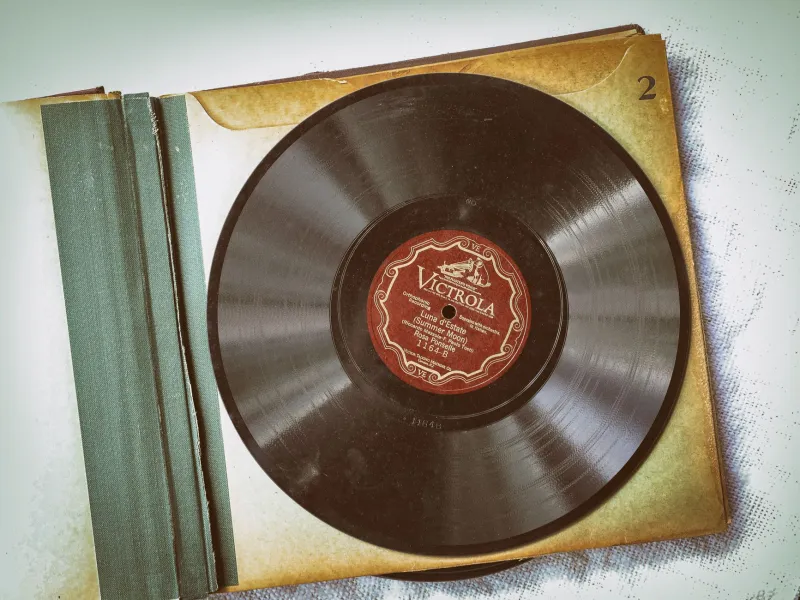
There's a particular kind of status symbol that doesn't announce itself loudly. It doesn't have a logo you can read from across the room or a price tag that gets mentioned in conversation. It announces itself through the ritual of its use — the careful removal of a record from its sleeve, the deliberate lowering of a needle, the particular quality of sound that fills the room afterward. It says, without saying anything: I chose this. Intentionally. When I could have chosen something easier.
The vintage electronics and memorabilia market has been building toward this moment for years, but somewhere around the mid-2020s it crossed a threshold. The objects of 1979 — the turntables, the cassette decks, the game cartridges, the cameras — stopped being curiosities and became cultural capital. And the people paying premium prices for them are not primarily collectors in the traditional sense. They are, in many cases, people who grew up with iPhones and are spending real money to hold something that resists the logic of the digital world entirely.
What Scarcity Does to Value
The economics of vintage 1979 hardware are genuinely strange by conventional market logic. The Technics SL-1200 turntable, introduced in 1972 and running through multiple iterations into the late '70s, was a mass-produced consumer product. Millions were made. And yet a well-maintained example in original condition now sells for $1,500 to $2,500 on the vintage market — more than most current-production entry-level turntables and competitive with mid-range audiophile units manufactured with modern precision.
The reason isn't purely technical, though the engineering holds up remarkably well. The reason is that the SL-1200 exists in finite quantity. No new ones are coming off a factory line. Every unit that gets damaged or discarded reduces the supply. And as the generation that grew up after these objects became obsolete develops disposable income and a hunger for physical authenticity, demand climbs against that shrinking supply.
The same dynamic, amplified to absurd extremes, plays out in the video game cartridge market. Common Atari 2600 titles — the stuff that used to sit in cardboard bins at garage sales — still run only a few dollars. But rare titles, misprint labels, and sealed examples of sought-after games have entered territory that would have seemed like a parody ten years ago. The aforementioned Air Raid cartridge, a 1982 Atari game released in such small numbers that fewer than 15 copies are known to exist, sold for $33,433 at auction in 2012 and the market has only gotten more aggressive since.
This is not nostalgia in the sentimental sense. This is asset appreciation with emotional upside.
The Tactile Economy
But money alone doesn't explain what's happening. Plenty of things are scarce without becoming cultural touchstones. What makes 1979-era objects specifically compelling — to collectors, to designers, to a generation of younger buyers who have no personal memory of the era — is their tactility. The way they insist on being physically engaged.
A vinyl record cannot be passively consumed. You have to choose a side. You have to handle it carefully. You have to be present in the room with it because you can't skip tracks from your phone. The experience of listening to a 1979 pressing of, say, Breakfast in America or The Wall is structurally different from streaming the same album — not just sonically, but behaviorally. It requires and rewards attention in a way that a playlist never does.
The same is true of a film camera loaded with physical film, or an Atari joystick with its single red button and absolute commitment to simplicity, or a cassette Walkman that gives you exactly one album at a time and no algorithm to tell you what to play next.
In a media environment defined by infinite choice and zero friction, these objects offer something that has become genuinely scarce: constraint. And constraint, it turns out, can feel like freedom.
Vinyl's Second Life as a Premium Product
Nothing illustrates the transformation of 1979-era culture into luxury goods more clearly than what's happened to vinyl records. The format was declared dead so many times between 1985 and 2005 that music industry analysts ran out of ways to write the obituary. And then it didn't die. It reversed course so completely that in 2023, vinyl outsold CDs in the United States for the second consecutive year — the first time that had happened since 1987.
But the vinyl market of 2024 looks very different from the one that went away. Pressing plants that couldn't keep up with demand have added capacity. Record Store Day has become a genuine cultural event that draws lines around the block. And the price point for new vinyl — often $30 to $40 for a standard album, with limited editions running $60 or more — positions it firmly as a premium purchase rather than a casual one.
Original 1979 pressings of significant albums command even more. A first pressing of London Calling in clean condition can fetch $150 or more. A sealed original of Off the Wall runs several hundred. The record is no longer just the delivery mechanism for the music. It is the artifact. It is the thing itself.
Status Without Screaming
What's interesting about this particular form of status signaling is how quiet it is. The person with a vintage Thorens turntable and a shelf of original pressings isn't necessarily posting about it (though some certainly are). The person who paid collector prices for a complete-in-box Atari game isn't wearing it on a chain.
The statement these objects make is more intimate than that. They say something about how you choose to spend your time, what you think attention is worth, and whether you believe that the friction of an analog experience is a bug or a feature.
For a generation that has grown up with every song ever recorded available in the palm of their hand, choosing to put a needle on a record is not a technological step backward. It is a deliberate act of presence in a world that keeps trying to make presence optional.
And increasingly, that choice is the most interesting luxury of all.